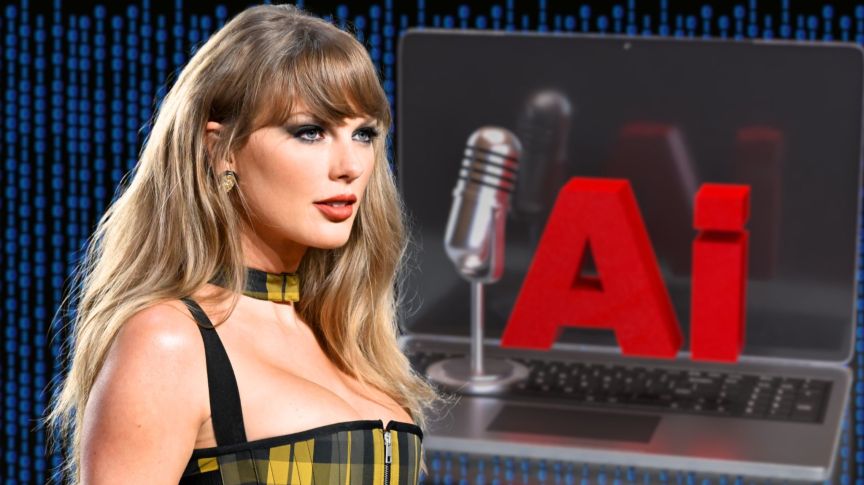
Taylor Swift is taking new legal steps to protect her identity in the growing fight against AI misuse, filing three new trademark applications tied to her voice and likeness.
According to E! News, Swift filed the applications through her company, TAS Rights Management, on April 24 with the U.S. Patent and Trademark Office. Two of the trademarks cover her voice, specifically the phrases “Hey, it’s Taylor Swift” and “Hey, it’s Taylor,” while the third protects a specific photo of Swift from her “Eras Tour” used to promote her Disney+ concert film.
The visual trademark covers an image of Swift onstage holding a pink guitar with a black strap while wearing a multi-colored iridescent bodysuit and silver boots, standing on a pink stage with a multi-colored microphone and purple lights behind her.
The move appears to be aimed at protecting Swift’s image and voice from unauthorized AI use, something she has already dealt with multiple times. Her likeness has previously been used in fake AI-generated endorsements, explicit images and Meta AI chatbots without permission.
One major example came in 2024 when AI-generated images falsely showed Swift supporting a political campaign she had not endorsed. At the time, she addressed the issue on Instagram, writing, “It really conjured up my fears around AI, and the dangers of spreading misinformation,” adding that it pushed her to be more transparent about her actual views.
Why Trademark Law Could Be a Bigger Weapon
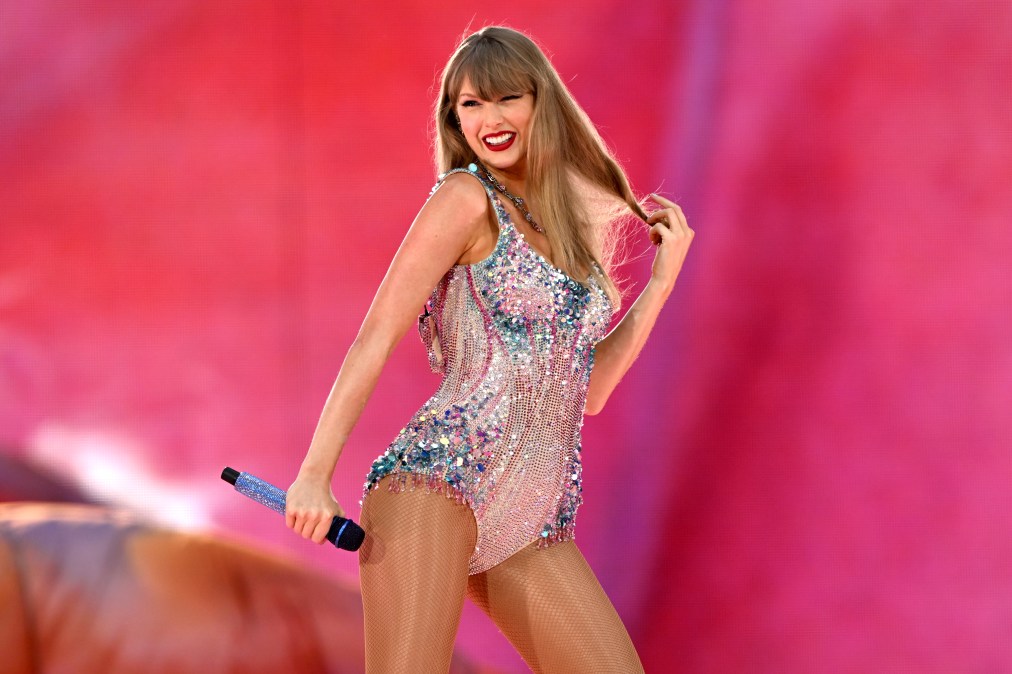
Per Variety, Swift’s filing is part of a growing “trademark yourself” strategy some celebrities are using to protect their voice and image from AI misuse.
Instead of relying only on publicity laws, trademark law can offer stronger nationwide protection and can cover content that is “confusingly similar,” not just exact copies.
Attorney Josh Gerben said this could help Swift challenge AI-generated content that sounds like her voice or closely resembles her image.
Matthew McConaughey recently did the same by trademarking his voice, image and signature phrases like “Alright, alright, alright.”
While the strategy has not been fully tested in court yet, it could work like copyright takedowns. Variety noted Disney used a similar legal move in 2025 after AI-generated videos featured trademarked Disney characters.
Hollywood’s Bigger Fight Against AI
Swift’s filing also comes as more celebrities publicly push back against AI use in entertainment.
Earlier this year, a major anti-AI campaign called “Stealing Isn’t Innovation” launched with support from stars including Scarlett Johansson, Cate Blanchett, Joseph Gordon-Levitt, Kristen Bell, Olivia Munn and Questlove, per The Hollywood Reporter.
The campaign, created by the Human Artistry Campaign, argues that tech companies are using books, music, scripts and performances to train AI systems without permission or payment.
One campaign statement reads, “Big Tech is trying to change the law so they can keep stealing American artistry to build their AI businesses — without authorization and without paying the people who did the work.”
The group is pushing for licensing requirements and opt-out protections so creators can control how their work is used.
For Swift, the latest filings signal that protecting her voice and image is becoming just as important as protecting her music.