


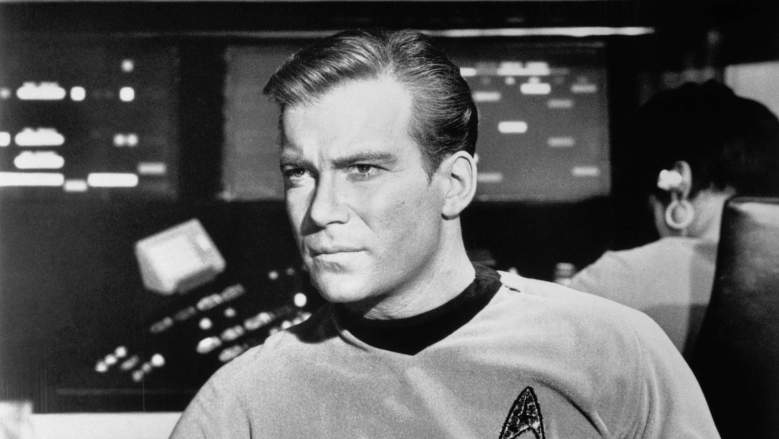
“Star Trek” is one of the most legendary brands in the history of modern fiction. Over the past sixty years, “Star Trek” has encompassed over 900 episodes of TV, more than a dozen feature films, and countless novels, comics, video games, and other media.
This modern pop culture juggernaut would not exist without its humble beginnings as a Desilu TV series created by Gene Roddenberry back in the mid-1960s. Following an initial failed pilot, “The Cage” (which would later be repurposed into the show’s only two-parter, “The Menagerie”), a second pilot episode was commissioned, and the resulting show ran for 79 episodes across three seasons.
To younger fans who grew up with newer forms of “Star Trek” media, The Original Series might seem antiquated and old-timey. Compared to the flashy production values of modern “Trek,” or even the comparatively advanced aesthetic of “Star Trek: The Next Generation,” The Original Series might look a little hokey by comparison. In 1966, the show took advantage of color photography in a way that was cutting-edge for its time, with the Starship Enterprise’s beautiful red highlights, the bright uniforms of its crew, and neon-colored phaser blasts during space battles. Fast-forward 60 years, however, and yeah, the show can look a little gaudy on a 75-inch OLED screen.
However, classic “Star Trek” still shines thanks to the strengths of its storytelling and the acting of its cast. The show is firmly rooted in the retro-future optimism of the tumultuous 1960s. In a time when it seemed like a positive future was out of reach, “Star Trek” assured viewers that the future was going to be a beautiful, wonderful utopia. Humanity will conquer their demons, and when they do, they will look to the new frontier of the stars in the sky. It was a timely message in 1966, and it’s timely in 2026.
Here are 10 all-time classic “Star Trek” episodes. If you’re a Trekkie who never got into the original show, or if you’re looking for a way to get into the series as a whole, you can’t go wrong with these legendary stories, starring Kirk, Spock, and the rest of the Enterprise crew.
The Trouble with Tribbles (Season 2, Episode 15)
If there’s a single most popular episode of “Star Trek,” this is it. In fact, when “Star Trek: Deep Space Nine” had an episode to pay wholesale tribute to “The Original Series,” they came up with “Trials and Tribble-ations,” which saw the cast of their show travel through time to interact with this very episode.
“The Trouble with Tribbles” sees the Enterprise visit Deep Space Station K7, which is quickly overrun by Tribbles, a species of adorable little plushies that eat and reproduce at an exponential rate. There’s also some fun Cold War stuff between the Enterprise and some Klingons trying to share K7 on their mutual vacations, and a little conspiracy involving a poisoned food supply, but it’s really just a relaxing and jolly episode, perfect for introducing little kids to “Star Trek.” And it only gets better when paired with its “Deep Space Nine” counterpart.
If you just can’t get enough Tribbles, there’s also an episode of “Short Treks” on Paramount+, “The Trouble with Edward,” which dives into the origin of a particularly ravenous strain of the little critters.
Balance of Terror (Season 1, Episode 14)
If you’re a lore hound, this classic episode marks the first appearance of Romulans, an offshoot of the Vulcan race. Their relationship would be expanded upon in the “Unification” episodes of “The Next Generation” and “Discovery,” as well as movies like “Nemesis” and the 2009 “Star Trek” reboot/revival. “Balance of Terror” is also an early example of the moral values of Starfleet. When an officer questions Spock’s allegiance in light of the revelation that Vulcans and Romulans are essentially the same species, Kirk tells him off, stating that bigotry has no place on the bridge of a starship.
But even if you don’t care about boring ol’ lore, “Balance of Terror” is simply a kick-ass episode of television, all about the Enterprise going toe-to-toe with a Romulan ship, like “Master & Commander” in space (the episode was actually inspired by the 1957 Robert Mitchum submarine movie, “The Enemy Below”). Its depiction of space battle tactics and focusing all the action on the bridge of the respective ships established a template for how space battles in “Star Trek” would play out for generations to come.
Like the “Tribbles” example above, “Balance of Terror” would be revisited in a later series. The first season finale of “Star Trek: Strange New Worlds,” “A Quality of Mercy,” saw Captain Christopher Pike visited by his future self, who managed to avoid his destiny (as seen in “The Menagerie”) and remain captain of the Enterprise. The episode revisits the events of “Balance of Terror,” but shows how things would have played out differently with Pike as captain instead of Kirk. I won’t spoil it, but… It doesn’t end well, which inspires Pike to reconsider his decision to fight fate.
The Menagerie (Season 1, Episodes 11 & 12)
Speaking of Christopher Pike, his story is fascinating, both in-universe and in a meta sense. Pike, as played by Jeffrey Hunter (“The Searchers,” “King of Kings”) was the lead character of “The Cage,” the original pilot of “Star Trek,” which was produced for the 1965 TV season, but was not picked up. The legend goes that the episode was too cerebral and high-concept for TV, but Gene Roddenberry was given a chance to re-jigger the series and make another pilot, which saw Hunter’s Pike replaced with a new character, James T. Kirk, played by William Shatner.
However, the pilot was not discarded. Instead, it was integrated as flashbacks in a new, two-part episode, “The Menagerie.” Pike was retroactively made captain of the Enterprise before Kirk’s time, and the lore of “Star Trek” expanded and is still being explored in “Strange New Worlds.”
The episode sees Spock go rogue out of loyalty to his former captain, who has been critically injured during a training exercise. Faced with seeing his old friend live out his final years in pain and paralysis or in an artificial paradise, Spock defies orders for the sake of his friend. It’s one of the earliest examples of “Star Trek’s” classic debate between the ‘needs of the many’ versus ‘the needs of the few or the one,’ and a fitting sendoff for a character who wouldn’t be fully explored until decades later.
Day of the Dove (Season 3, Episode 7)
Particularly in the early days of “Star Trek,” the default ‘bad guys’ were the Klingons. Before their code of honor had been established (most credit for that goes to “Star Trek III: The Search for Spock”), if the Enterprise needed to go up against an enemy ship with no questions asked, the adversary would likely be Klingon.
There were some episodes that added depth to Klingons, such as “The Trouble with Tribbles,” but “Star Trek’s” first real brush with the prospect of Federation/Klingon peace came with “Day of the Dove,” in which an alien entity feeds off the hatred between the Enterprise crew and a crew of Klingons, encouraging them to fight, fueling their enmity, and giving them weapons. The two crews don’t need much reason to hate each other, and are more than happy to fight for no particular reason, because, after all, the Federation and Klingons are enemies. It’s the way it’s always been and the way it always will be, right?
Ultimately, the crews must band together and fight the alien entity, not with weaponry and tactics, but with love and good vibes. The only alternative to war is peace, and only through peace can both ‘tribes’ defeat their mutual enemy. Is it a heavy-handed message? Yes. Does it work? Also yes. Decades after this episode, Klingons and the Federation would make peace with each other. Captain Picard’s Enterprise-D had a Klingon bridge officer, something unthinkable on the original Enterprise. Of course, it was Kirk himself who brokered peace and saved the entire Klingon race during the events of the sixth (and this writer’s favorite) “Star Trek” movie, “The Undiscovered Country.”
A Taste of Armageddon (Season 1, Episode 23)
It’s something of a running joke among the “Star Trek” fandom that Captain Kirk played fast and loose with the Prime Directive, a ‘non-interference’ rule that forbids Starfleet explorers from changing the destiny of a pre-warp civilization. Of course, if I had a nickel for every time a Starfleet captain broke that rule during an episode of “Star Trek,” I’d have a great many nickels. But sometimes, a captain’s duty goes beyond regulations, and the ‘right thing to do’ can’t be accounted for by ‘standard operating procedure.’
And that brings us to “A Taste of Armageddon,” in which the Enterprise visits a planet in the grip of a bloody war… Sort of. Rather than open warfare and the chaos and carnage that ensues, the battles are all played out via computer simulation, and the designated victims are led into disintegration chambers where they are killed painlessly, cleanly, and with little fanfare. This war has become so normalized and routine that no effort is being made to actually end it. The message is that war must be seen in its full light so that both sides must be forced to understand the toll it takes so that they can put forth an effort to resolve the conflict and achieve peace.
At the time of the episode’s production, it was a commentary on the Vietnam War, and how American casualties were read on nightly news broadcasts. These days, the episode’s message can be applied to any number of situations, from American drone warfare during the War on Terror to Russian media control during that country’s unjust war against Ukraine. Good science fiction holds a mirror to society. Great science fiction isn’t limited by the era in which the story was first told; it continues to resonate as generations go by.
The Tholian Web (Season 3, Episode 9)
Season 3 is widely considered to be the weakest season of the original “Star Trek,” but there were still some noteworthy episodes here and there, such as the aforementioned “Enterprise Incident” and this one, “The Tholian Web,” which sees the Enterprise come across the derelict remains of the Defiant, a sister ship that’s phasing in and out of reality.
As Captain Kirk is aboard the Defiant, the Enterprise is accosted by Tholian ships, and the result is a tense standoff that sees Spock take command and try to figure out how to save the ship and rescue his captain before he’s whisked off to a dimension from which he may never return.
So… Where did the Defiant go? Audiences had to wait nearly 40 years to find out. The fourth season of “Enterprise” revealed that the Defiant went back in time and into the Mirror Universe (as seen in “Mirror, Mirror”) where the United Federation of Planets is replaced by the evil Terran Empire. The crew of the mirror Enterprise transfer over to the displaced Defiant and take advantage of their newfound superior firepower to take over the Empire.
Space Seed (Season 1, Episode 22)
In “Star Trek Into Darkness,” Spock tells his younger self, “Khan Noonien Singh is the most dangerous adversary the Enterprise ever faced,” and he wasn’t lying. Khan, as played by Ricardo Montalban, previously appeared in “Star Trek II: The Wrath of Khan,” but that movie was essentially a sequel to his debut in “Space Seed.”
The Enterprise comes across a ship floating out in space, its occupants trapped in suspended animation. As it turns out, the occupants were veterans of the Eugenics Wars (of the 1990s… Don’t worry about the timeline, it’s easier if you don’t worry about it), led by Khan Noonien Singh, a global conqueror who escaped justice by hiding in the dark reaches of space. But now, more than 200 years later, Khan awakens in a strange new future with his goal unchanged: to conquer, starting with the starship Enterprise.
Khan was groundbreaking as a villain of color who was more than just a thug or bandit, but an intellectual titan genetically engineered to be superior. Sure, Ricardo Montalban was Mexican playing an Indian Sikh, but at least he wasn’t a white guy in caked-on makeup putting on a crummy accent… Though that would have been more effort than the version of Khan seen in “Star Trek Into Darkness,” who is inexplicably played by the whiter-than-white Benedict Cumberbatch. To his credit, Cumberbatch gives one heck of a performance as Khan, though there’s really no excuse for the complete erasure of the character’s ethnicity, Indian or Latino.
Amok Time (Season 2, Episode 1)
If you’re into ‘shipping,’ which is when the fandom chooses to romantically pair two characters, then you know that Kirk and Spock are the ‘one true pair,’ the greatest love story in sci-fi history. Heck, by the time of “Star Trek III: The Search for Spock,” it’s basically fully canon. But it arguably started here, with the second season premiere, “Amok Time.”
The dynamic between Kirk and Spock, which had slowly developed due to the actors’ natural chemistry throughout Season 1, is on full display in this episode, which explored Spock’s Vulcan culture as he goes through ‘pon farr,’ which is like being in heat, but with a touch of psycho rage. That’s not a clinical term, but it gets the point across.
The show-stopping sequence sees Kirk and Spock locked in a fight to the death due to the machinations of Spock’s betrothed, T’Pring, and that’s where Dr. McCoy, of all people, gets the opportunity to use his advanced medical knowledge to save the day… And his friends. The result is an emotional roller coaster that truly solidifies the bond between Kirk and Spock (and, yes, McCoy), a bond that would define this era of “Star Trek” for generations to come.
The City on the Edge of Forever (Season 1, Episode 28)
The legend goes that writer Harlan Ellison was enraged by the changes made to his original script, to the point where his original teleplay, not the filmed version, won a Writers Guild of America award. Then again, the final version, which had been re-written multiple times by Gene Roddenberry, Gene L. Coon, D.C. Fontana, and others, managed to win a Hugo Award; any way you cut it, “The City on the Edge of Forever” is an all-timer.
The episode sees Dr. McCoy, while treating Lieutenant Sulu on the bridge, accidentally inject himself with an overdose of cordrazine, a fictional space drug that makes you freak the heck out. In the midst of his madness, McCoy escapes the Enterprise to the planet below, which just so happens to have a time portal, known as the Guardian of Forever. Kirk and Spock follow him to the 1930s, where McCoy’s presence has created a new timeline where a woman named Edith Keeler (Joan Collins), who was supposed to die in a random tragic traffic accident, instead lives to form a peace movement that delays America’s entry into World War II, allowing Nazi Germany to develop the atomic bomb first and conquer the world. Whoops!
It may be contrived, but it works because the focus is squarely on the love story between Kirk and Keeler, a woman ahead of her time, who must die so that the world may live. It’s one of the most romantic episodes of any “Star Trek” ever, bolstered by a tremendous guest turn from Collins and William Shatner’s gut-wrenching anguish at having to choose whether to doom the world or let the love of his life slip away forever. The script, mangled as it may or may not have been from Ellison’s original, still holds up today, and the ending (and Kirk’s final line in particular) resonates as strongly in 2026 as it did when it first aired in 1967.
The Conscience of the King (Season 1, Episode 13)
This one delves into Captain Kirk’s backstory. When he was a young teenager on Tarsus IV, the space colony. When the food was contaminated, Governor Kodos declared martial law and ordered the death of half of the colony so the rest could survive. However, Starfleet aid arrived just after the mass murder, and Kodos was presumed dead.
Fast-forward to the present, and a troupe of actors is visiting the Enterprise to put on a production of Shakespeare’s “Hamlet,” but one of the actors (Arnold Moss) has a dark secret. Could he be Kodos the Executioner, hidden in plain sight as a Shakespearean thespian? I won’t spoil it, but there are some shocking twists, some sequences of Hitchcock-like tension, and, of course, Captain Kirk getting frisky with a hot babe (Barbara Anderson) who has her own connection to the mystery.
If you’re a Shakespeare enthusiast, this should prove a particularly fascinating episode, with allusions (and direct references) to both Hamlet and Macbeth, as well as a look at what black box theater might look like in outer space. But even if you don’t know Shakespeare from Shake Weight, it’s a great episode that shows the literary gravitas of “Star Trek” at its best, legitimizing what some might see as a silly sci-fi series by utilizing Shakespeare as a storytelling device.










Comments
10 Essential ‘Star Trek: The Original Series’ Episodes You Need to Watch