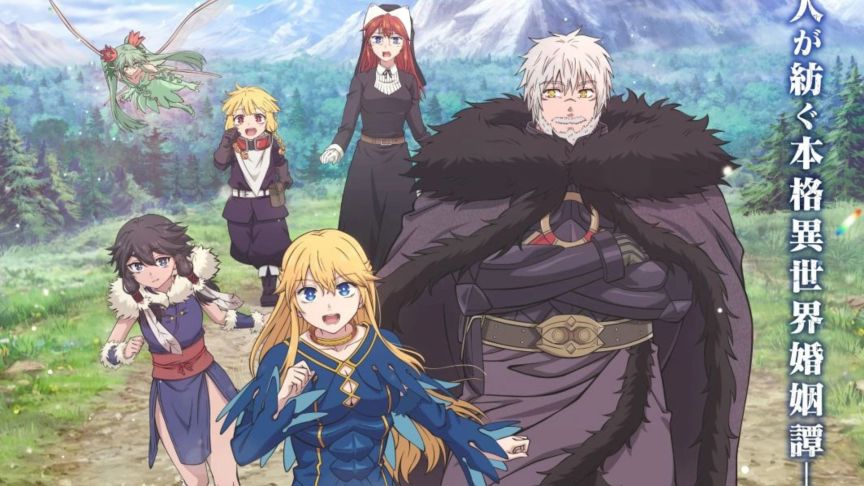
Most anime romance has a formula. Someone holds power over someone else. Tension builds in that gap. Feelings grow in spite of it — or because of it. The Warrior Princess and the Barbaric King arrived on Crunchyroll on April 9 with a setup that looks exactly like that formula. One episode in, it’s quietly doing something structurally different.
The capture scene plays exactly as expected. Serafina de Lavillant, the strongest knight in the West, wakes up in chains in enemy territory. Her mind cycles through the worst: execution, violation, forced pregnancy. Everything to know about the show before watching is covered in the Crunchyroll premiere breakdown. What actually happens is a marriage proposal from a king who treats her like a peer. Surprising. But the deeper reason this romance already has emotional weight has nothing to do with Veor being kinder than expected. It has everything to do with what built Serafina’s fears in the first place.
The Real Problem With Captivity Romance
Anime has a long and complicated history with the captivity-to-romance arc. The Ancient Magus’ Bride is the most critically celebrated version — Chise Hatori is sold at auction and claimed by Elias Ainsworth, and the entire emotional architecture of that series runs on her learning to reframe the power he holds over her. The romance is genuinely moving. But the foundation never fully resolves the asymmetry. It asks the audience to grow comfortable with it instead.
The Warrior Princess and the Barbaric King looks identical from the outside. One layer down, it is built on different ground entirely.
When Serafina imagines the worst during her captivity, the fears she lists aren’t abstract. They are a precise reflection of what her own brother told her she deserved — barefoot, pregnant, and away from the battlefield. Her kingdom, the one with the castles and chivalric titles and the visible markers of civilization, is the place that worked hardest to diminish her. The eastern “barbarians,” by contrast, are the first culture she has encountered that treats her fighting ability as something worth having rather than a trait to apologize for. Veor’s people make a practice of marrying warrior women. Her skills are the reason she was taken alive.
The romance doesn’t begin because Veor holds power over her. It begins because he may be the only person who hasn’t tried to use that power to reduce her. That civilized-versus-barbaric inversion is the sharpest structural move Warrior Princess makes in episode one — and almost no one is leading with it.
Two Separate Burdens in the Same Room
The other half of what separates this show is something most episode-one coverage has glossed over: Veor is eighteen years old.
Serafina is twenty-six, a veteran of a seven-year war, carrying a nation’s hunger and a family that spent her childhood wishing she’d been born differently. Veor is a teenager holding an entire tribe’s survival together — a king whose authority exists only as long as his last victory holds. He is physically imposing and militarily formidable, and he is quietly, structurally alone.
This is the architecture that separates the best anime romance from the rest. Spice and Wolf — still the benchmark for this in anime — works because Holo and Lawrence are both independently whole people carrying independent forms of loneliness. Their relationship has weight because neither is defined by what the other can provide. They recognize something in each other before they want anything from each other.
Warrior Princess is attempting that same construction at a darker register. Serafina is not softened by captivity. Veor is not driven by possession. What episode one actually stages is two people who have been carrying their respective weight alone for a long time, suddenly sharing the same room. That is a rarer foundation than power imbalance. It is also a more durable one — because the romance has somewhere real to go once the initial tension resolves.
Whether this series can sustain that construction is the question the season will answer. Spring 2026 is one of the strongest anime lineups in years, and the bar for standing out is high. One episode in, the architecture is already there.
What Else to Know
- Veor being 18 to Serafina’s 26 is established in the manga but hasn’t been foregrounded in the anime yet — it deepens the leadership-loneliness reading significantly once the series leans into it.
- The original Japanese title, Himekishi wa Barbaroi no Yome, translates to “The Princess Knight Is the Barbarian’s Bride” — positioning Serafina as the grammatical subject of the story, not the king.
- Seven Seas Entertainment publishes the English print manga under a completely different name: The Barbarian’s Bride — a title that shifts emphasis away from her entirely.
- Serafina’s kingdom is established as the aggressor in the war — her side invaded the east for land and resources, a detail that makes the “barbarian” label read as deliberate propaganda.
- The series was delayed from October 2025 to April 2026 specifically for quality improvements — one of the rare cases of a Japanese studio publicly citing production care as the reason for a delay.