Jay Manuel has opened up about his relationship with Tyra Banks in an essay for The New York Times.
The former creative director of “America’s Next Top Model” is back in the spotlight following the release of documentary “Reality Check: Inside ‘America’s Next Top Model.'”
Jay Manuel: “It’s Difficult To Separate Friendship From Business”
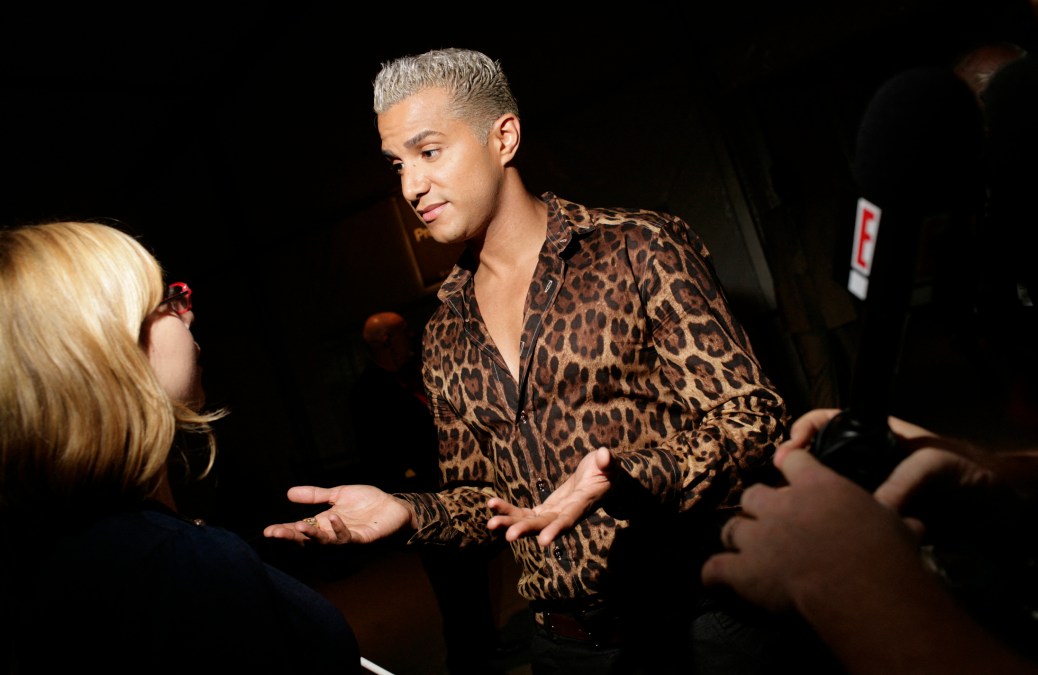 Getty
GettyManuel wrote that although he admired Banks’ drive and vision, “over time, as the show grew and the stakes got higher, the dynamic between us shifted.”
“That left me questioning the version of our relationship I had once believed in,” he noted.
“It’s also difficult to separate friendship from business when the two become so deeply intertwined,” he continued. “Relationships are complicated. Power imbalances can exist within and alongside a genuine friendship.”
However, he described these contradictions not as “evidence of deception,” but as “evidence of being human.”
After Manuel began to “push back” on Banks’ creative decisions, he says “the dynamic shifted – and tension began.”
US Weekly reported that Manuel tried to leave the show after cycle 8, emailing Banks and the show’s producers with his decision.
“I am disappointed,” Banks allegedly replied, refusing further contact.
Although Manuel returned for cycle 9, the relationship was tenuous.
“I showed up and she didn’t want to speak with me. I didn’t know what that meant… that was difficult for me,” he said in a 2020 US Weekly interview.
“What was difficult for me was, you know, when the cameras were on we’d talk, but when they were off, I had no communication. It was uncomfortable.”
Manuel Also Discusses ‘ANTM’ Controversy
 Getty
GettyManuel first appeared on ‘ANTM’ as a makeup artist in cycle 1, later promoted to the role of creative director, US Weekly explained.
He also served as photo shoot director, sometimes enabling controversial decisions.
“There’s one particular moment that has resurfaced in both documentaries — a photo shoot in South Africa during Cycle 4 of ‘Top Model’ involving the contestant Keenyah Hill,” he wrote in the essay.
During the shoot, Hill told the team that a male model was making her uncomfortable with his advances.
“In the Netflix documentary, when Keenyah tells her story of that day, it’s clear that the model had been sexually harassing her,” Manuel recalls.
“At the time, I believed I was doing my job by encouraging her to finish the shoot.”
He revealed the documentary had not shown that he had consulted with producers and directors before advising Hill.
“I remember asking them what I should do because I wasn’t sure what the right call was… I recall being told to reinforce that we were in a professional environment and to encourage her to continue.”
Manuel admitted that Hill’s concerns should have received “immediate attention.”