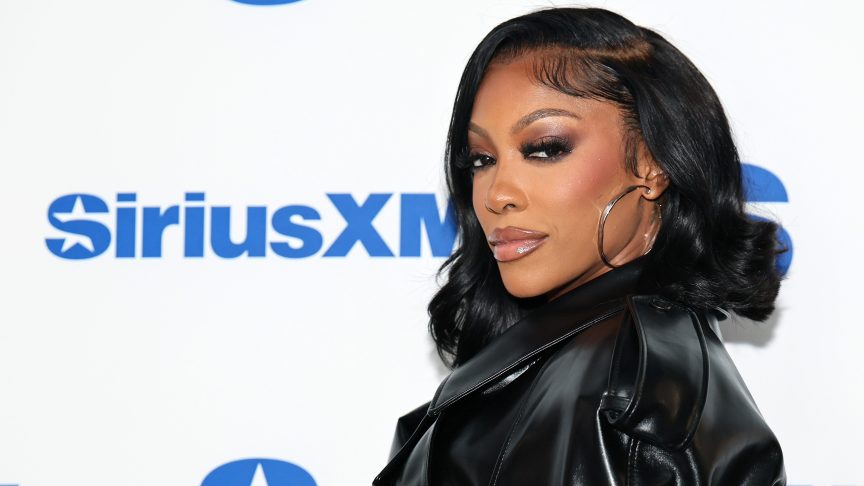
Porsha Williams is opening up about a deeply personal health battle that ultimately left her facing a decision she had spent years trying to avoid.
“The Real Housewives of Atlanta” star revealed that she underwent a hysterectomy after a years-long struggle with uterine fibroids. Williams had previously pursued multiple treatments in hopes of managing the condition while preserving her fertility, but she said her health eventually reached a point where surgery was no longer optional.
“I didn’t have a choice about the hysterectomy, but it saved my life,” Williams wrote in a personal essay for Glamour.
The reality star’s experience with fibroids stretches back more than a decade, beginning at a particularly complicated moment in her life: the same day she learned she was pregnant for the first time.
Porsha Williams Says Her Battle With Fibroids Began at 30
Williams was 30 and trying to become a mother when she received two major pieces of news at once.
“I found out I had fibroids the same day I found out I was pregnant. I was 30, trying for my first child, and dealing with fertility issues that had landed me with a specialist,” Williams wrote. “The fibroid outgrew that pregnancy, and I ended up having a miscarriage at four months.”
A year later, Williams underwent a myomectomy, a procedure used to remove uterine fibroids. But her struggle with the condition was far from over.
The fibroids returned while she was pregnant with her daughter, Pilar Jhena McKinley, whom Williams shares with ex Dennis McKinley.
“I had a myomectomy a year later, but they grew back while I was pregnant with my daughter, Pilar. She outgrew the large one that returned, fighting through it, which is why she’s my rainbow baby. During my last month of pregnancy, I was on bed rest while the fibroids degenerated. It was painful, but I was so thankful my little miracle baby pushed through.”
Williams gave birth to Pilar in 2019. Afterward, she said the fibroids “came back with a vengeance.”
Still unsure whether she wanted another child, Williams continued looking for an option that would allow her to preserve her fertility. She underwent fibroid embolization and initially believed the treatment had worked.
Then her health began changing again.
Porsha Williams Says Doctors Found 21 Fibroids During Surgery
Williams said the stress surrounding her divorce from Simon Guobadia coincided with another difficult period in her health.
She eventually sought help from a fibroid specialist and learned that the condition had returned far more extensively than she realized.
“She called with the results: a little over 15 large fibroids in my uterus, plus endometriosis and another diagnosis involving the uterine lining,” Williams recalled. “As we sat in her office, she told me I needed a hysterectomy.”
The news meant confronting something Williams had spent years trying to prevent. She would keep her ovaries, but her uterus would be removed, ending her ability to carry another pregnancy.
During the operation, doctors discovered the extent of the problem was even greater than scans had shown.
“During the surgery, they found 21 fibroids total. The largest was the size of a cantaloupe,” Williams said. “I woke up after the surgery and thought, ‘A part of me is gone.’ Fibroids aren’t something we usually talk about as women, and neither are hysterectomies. There’s a stigma to it, as if you’re somehow less of a woman without your uterus.”
For Williams, however, the surgery also brought answers to health problems she had not realized were connected.
“I didn’t have a choice about the hysterectomy, but it saved my life. My quality of life has improved 100 percent since,” she wrote.
Williams said she later understood that the fibroids had been contributing to migraines and low iron levels, among other problems. Their size had also begun putting pressure on her bladder and significantly affecting her everyday life.
Porsha Williams Says Daughter Pilar Changed Her Perspective
Williams’ decision carried an emotional weight beyond the surgery itself. For years, she had deliberately chosen treatments that could leave open the possibility of having another child.
Now, she is looking at motherhood through a different lens.
“Now I take snapshots of every single moment with my daughter. I’m even more present, more grateful, because when I look at her, I see a true miracle,” Williams wrote. “I’ve always called her my lifesaver, since she gave me my purpose, and now that feels even more true. I really was chosen to be her mom.”
By sharing her experience publicly, Williams is also putting a spotlight on a health issue she believes women do not discuss openly enough. Her story is not simply about the surgery she ultimately underwent, but the years of treatment, fertility considerations and difficult decisions that came before it.
For Williams, the hysterectomy closed one chapter she had fought hard to keep open. But after years of living with fibroids, she says it also gave her something back: her quality of life.