By the summer of 2001, “Survivor” was still riding the high of its first set of wildly successful seasons, garnering as many as 125 million weekly viewers during its first year on CBS.
Following stops in Borneo and the Australian Outback, a third installment had already been filmed on Kenya’s Shaba National Reserve – soon to be known as “Survivor: Africa” – with a fourth already in the pre-production pipeline.
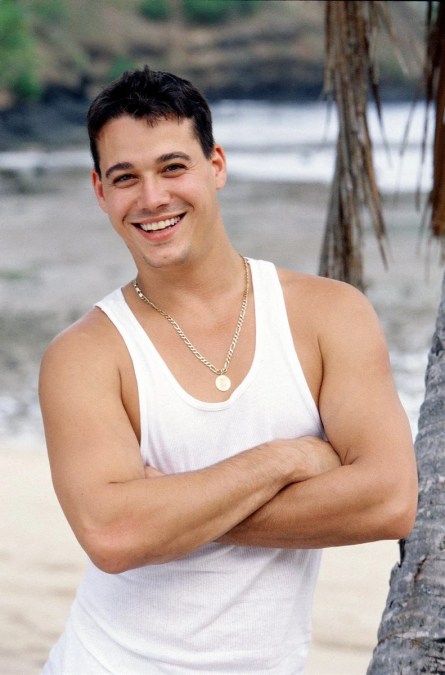
This fourth season would eventually become “Survivor: Marquesas,” most widely remembered as the introduction of series legend “Boston Rob” Mariano, but what many fans – especially newcomers to the franchise – may not be aware of, is the fact that the installment was originally supposed to take place on on oasis in Jordan.
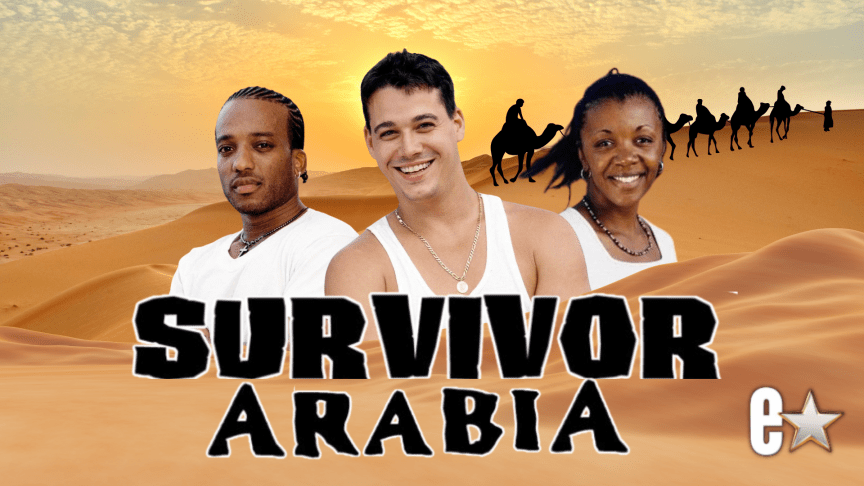
Unofficially known as “Survivor: Arabia,” here’s everything you need to know about the season that never aired.
Series Creator Mark Burnett Poured Millions Into ‘Survivor: Arabia’
 Getty
GettyFollowing the success of “Survivor: Borneo” and “Survivor: The Australian Outback,” CBS was on the hunt for more exotic and challenging locations to film future seasons.
Season 3, set in Africa, had proved particularly difficult for contestants, not only due to the intense heat and excruciating climate, but also because the castaways were forced into constant vigilance by the threat of wild lions roaming Kenya’s Shaba Reserve.
Despite the strain on the players, then-producer Mark Burnett wanted to keep the stakes high as the franchise moved forward, originally planning to situate the show’s fourth season in the Middle East.
 CBS
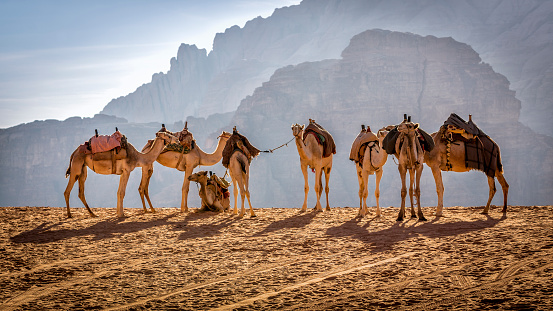
CBSBurnett planned to open the season on a shot of the castaways – which would eventually include Boston Rob – riding across the Arabian sands on camel-back. In theory, they’d arrive in an oasis in Jordan, where’d they meet up with host Jeff Probst and set up their Bedouin tents, where they’d live for the next 39 days of the competition.
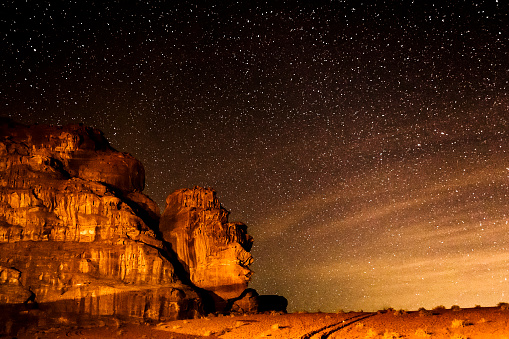
The creator’s seriousness about utilizing the location was evidenced by his 2001 travels to Wadi Rum, a protected desert wilderness in Jordan, where Burnett even met with then-King of Jordan, King Abdullah II, to discuss the project.
Thoroughly convinced by Jordan’s beauty and challenging terrain following his week-long visit, Burnett’s crew began pre-production on a number of “Arabian Nights”-inspired challenges, some of which would be held, once again, on camel-back, with shooting set to begin that fall.
Everything changed, however, following the horrific events of September 11, 2001.
The King of Jordan Begged CBS to Continue Producing ‘Survivor: Arabia’
 Getty
GettyIn the aftermath of 9/11, the producers of “Survivor” considered pulling the show from the air altogether, not wanting to diminish the bravery of the real-life survivors and heroes who were, at the time, splashed across the front page of every newspaper in the country.
Even more than that, the idea of hosting a season set in the Middle East just months after the attacks was not only ill-advised, but entirely inconceivable to the American public, despite the fact that Jordan, specifically, played no role in the events.
According to Burnett, he later received a call from King Abdullah II, pleading with the creator to continue on with the production.
“If ever the Middle East needed reassurance, we need it now Mark. Film your show in Jordan. Show the world that terrorists cannot alter peaceful plans,” the monarch reportedly said at the time.
While Burnett admitted he was flattered by the king’s pleas, he knew that sending 16 Americans into the Middle East at a time of extreme unrest for the sake of a game show was not only a dangerous gamble, but also one that would’ve resulted in major backlash from fans, potentially killing the franchise in the process.
At the time of 9/11, Burnett and CBS had as many as 50 crew members and millions of dollars worth of equipment on-location in Jordan, preparing the upcoming season. Despite his refusal to continue production, Burnett still managed to convince the King to help provide safe passage in and out of the area.
Once everyone was safe, CBS had to begin scouting for a new location, and fast.
How Did ‘Survivor’ End Up Shooting Season 4 in Marquesas?
 Getty
Getty“I remember calling [CBS boss] Leslie Moonves and saying, ‘We clearly can’t shoot in the Middle East,” Burnett said in an interview on “Archive of American Television” in 2011. “And he told me, ‘change locations and figure it out.’”
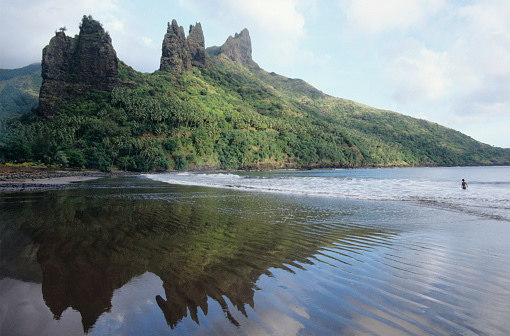
“All of our equipment was stuck in Aqaba. In those days [after 9/11], no ships could leave harbors. So we had to buy all new equipment. At the time, many cruises got cancelled. So suddenly there was an available cruise ship. It sailed into the Marquesas harbor from Seattle and that is where the crew stayed.” he added.
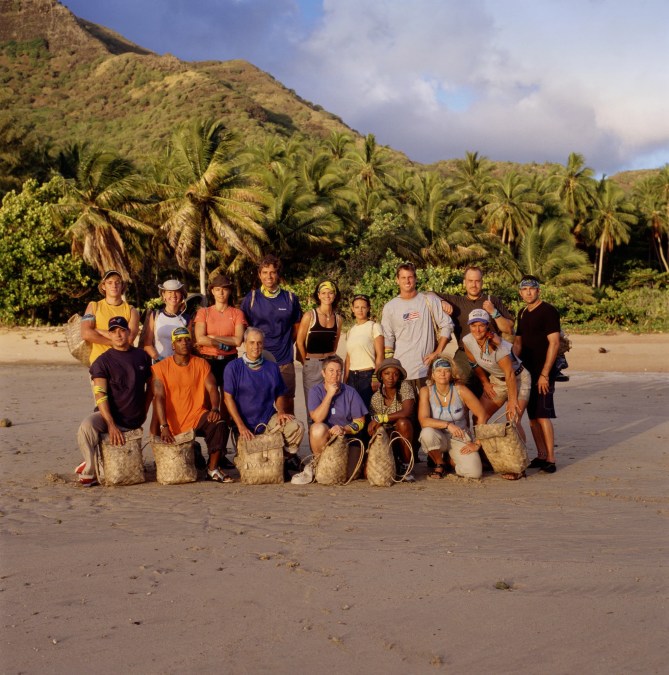
Between the costs of new equipment and the revenue loss of pre-production advertising for “Survivor: Arabia,” CBS was already in the hole to the tune of more than $100 million for the season. As such, when they landed in the Marquesas Islands – a volcanic archipelago in French Polynesia – Burnett implemented a “back to the beach” motif for the installment to save on costs. (While beach-side locations are now standard fare for the franchise, they’d been absent on both Season 2 and Season 3.)
Under a major time crunch, Burnett’s crew threw together “Survivor: Marquesas” at a break-neck pace, with filming ultimately taking place in November-December 2001 before airing its premiere episode on CBS in February 2002.
 CBS
CBSWhile a “Survivor” season set in the Middle East seems like an impossibility in a post-9/11 world, the setting could have resulted in one of the most visually stunning and unique installments of the franchise. Regardless, “Marquesas” set the show on a new strategic path and was instrumental in turning “Survivor” into the global phenomenon it is today.
Still, it would have been an epic sight to see Boston Rob Mariano making his series debut while riding a camel across the scorching sands of Arabia.