Horror is undergoing a renaissance these days. From “Sinners” and “Weapons” taking home hardware at the Oscars to “Backrooms” and “Obsession” becoming the two biggest films of 2026, in any genre, the format certainly isn’t wimping out on scaring audiences. HBO Max recently expanded its catalog of horror titles with the addition of the entire “The Evil Dead” franchise, and it joins an impressive list of horror films, both old and new, that’ll get you screaming.
When perusing HBO Max, it can be difficult to pick a film to watch, but we’ve selected 10 horror movies you can watch based on several recent films that you already enjoy.
Carnival of Souls
Herk Harvey only ever directed one horror film. 1962’s “Carnival of Souls” follows a young woman stalked by a mysterious man, and she confronts her own mortality through a series of strange encounters near an abandoned carnival. From its slow, crackling tension to several masterful jump scares (e.g., the passenger window scare is an all-timer), “Carnival of Souls” proves that all you need is a good story and strong performances to do the heavy lifting in frightening the audience. If you’re a fan of “The Black Phone,” “Good Boy,” or “The Conjuring: Last Rites,” “Carnival of Souls” might be right up your alley!
Eraserhead
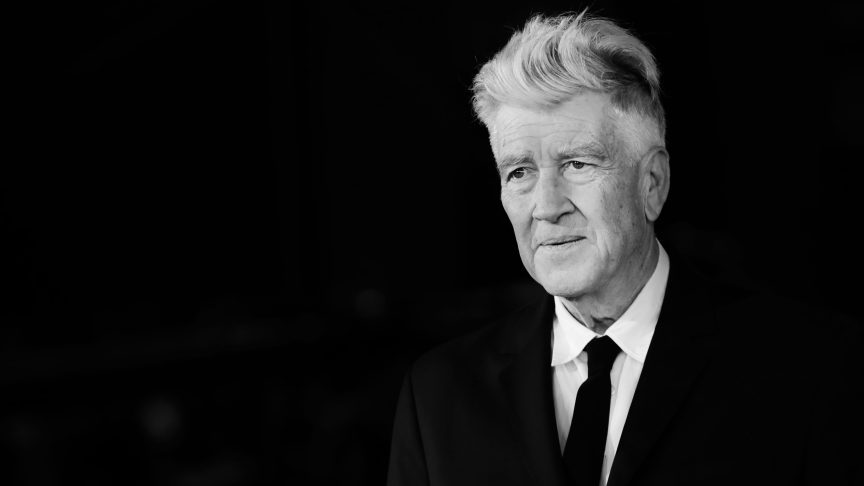
You can’t go wrong with David Lynch. He masterfully mixed genres until you couldn’t tell the difference between them. All you know is you’re both emotionally wrecked and scared out of your mind. His feature film directorial debut, “Eraserhead,” gave audiences a glimpse into the mind of a madman. After getting a young woman named Mary X (Charlotte Stewart) pregnant, oddball Henry (John Nance) marries her, and they move in together. Their child ends up being a peculiar reptile creature, but that’s the least of their problems. Experiencing “Eraserhead” for the very first time is like a fever-addled nightmare that you actually don’t want to end. It’s also great to see Charlotte Stewart, who genre fans might recognize from 1990’s creature feature “Tremors.” This is most certainly for fans of “Possessor,” “Weapons” and “Longlegs.”
Eyes Without a Face
Georges Franju’s “Eyes Without a Face” arrived in a very busy year for horror. The French film competed against the likes of Alfred Hitchcock’s proto-slasher “Psycho,” starring Norman Bates and Janet Leigh, and Michael Powell’s “Peeping Tom,” which popularized the first-person POV in horror films. “Eyes Without a Face” tells the story of a young woman whose face was disfigured in an accident, and her father kidnaps and mutilates women and grafts their skin onto his daughter’s. Despite the grotesque nature of the story, there’s a surprising amount of beauty and fragility in its conversation about youth, acceptance, and tragic regret. “Eyes Without a Face” works well with “The Invisible Man” (2020) and “Old.”
Häxań
Directed by Benjamin Christensen, 1922’s “Häxań” is equal parts video essay, documentary, and gripping storyboard. Christensen chronicles the roots of modern witchcraft and the portrayal of women as outsiders in culture and society. Every folk horror film that came after can be traced back to 1922. The depiction of Satan is particularly unsettling and serves as perfect nightmare fuel. “The Witch,” “The Wicker Man” and “The Ritual” would make great accompaniments.
Night of the Living Dead
George A. Romero perfected the zombie genre. “Night of the Living Dead” is to “I Walked with a Zombie” as “Halloween” is to “Psycho.” The 1968 horror film came at a time of great social unrest, and having a strong Black lead in Duane Jones, who plays the intuitive and sharp-thinking Ben, happened to be a coincidence, but it feeds into the film’s legacy. It recentered the Black experience in modern horror and pushed the genre forward. The mythology of zombies has been tampered with and rearranged in countless zombie descendants, from “The Walking Dead” to “Dawn of the Dead.” If you’re a fan of any modern zombie film, it’s long overdue to see where it all really started.
Scanners
“Scanners” examines abuses of power and a class system. David Cronenberg’s 1981 film centers on a group of men and women, known as scanners, who possess great telepathic and telekinetic powers. But a subset of those plot to create a race to rule the world. “Scanners” was certainly a progressive, boundary-pushing horror sci-fi that didn’t skirt around any creative or thematic limitations. It’s perfect for fans of “Companion” and “Invasion of the Body Snatchers.”
The Blob
Before 1988’s “The Blob” remake delivered some gnarly practical effects, the 1958 original explored the psychological effects of an alien invasion on the day’s youth. When two teenagers realize what’s happened, the fate of the world lies in their hands. In the era of arguably the birth of science fiction, the film stands out as an important storytelling moment, along with the original “The Fly,” later remade in 1986 and starring Jeff Goldblum. It’s not as goopy as the remake, but it might be far more interesting from a script perspective. If you like “Twin Peaks” and “Fargo,” this will be right up your alley.
The Brood
David Cronenberg delivered transcendent horror at every turn. With 1979’s “The Brood,” a deranged doctor attempts an experimental, psychoplasmic therapy on a pregnant woman. It’s so mad that it just might work–or not. The therapy leads to some truly wild imagery that you’ll never forget. If you’re obsessed with “The Substance,” “The Brood” will be exactly what you need.
The Mummy
Lee Cronin’s “The Mummy” merely took the essence of the 1932 original film and added in a heavy dose of “The Evil Dead.” That’s fine and dandy, but that just means it’s time to check out Karl Freund’s original film. It makes great use of the playful dance of light and shadow in ways that most modern films fail to explore. Funnily enough, the film tells the story of a group of archaeologists who discover the mummified body of Egyptian prince Imhotep and a scroll. When one of them reads from the scroll, Imhotep comes back to life. Sound familiar? It’s also great to see Boris Karloff lumbering around, as always. “The Mummy” is great for those who love the “Evil Dead” franchise, as well as “28 Years Later: The Bone Temple.”
Vampyr
Carl Theodor Dreyer’s 1932 Gothic horror film “Vampyr” is based on “In a Glass Darkly,” an 1872 collection by Sheridan Le Fanu, and tells its vampire story through very little dialogue and title cards. A student of the occult wanders into a French village, where everyone is under the spell of a vampire. Its genius mix of silent film and then-modern cinematic pleasure will certainly not work for many genre fans, but if you like “Salem’s Lot” and Robert Eggers’ “Nosferatu” remake, you’ll want to add this one to your watchlist.