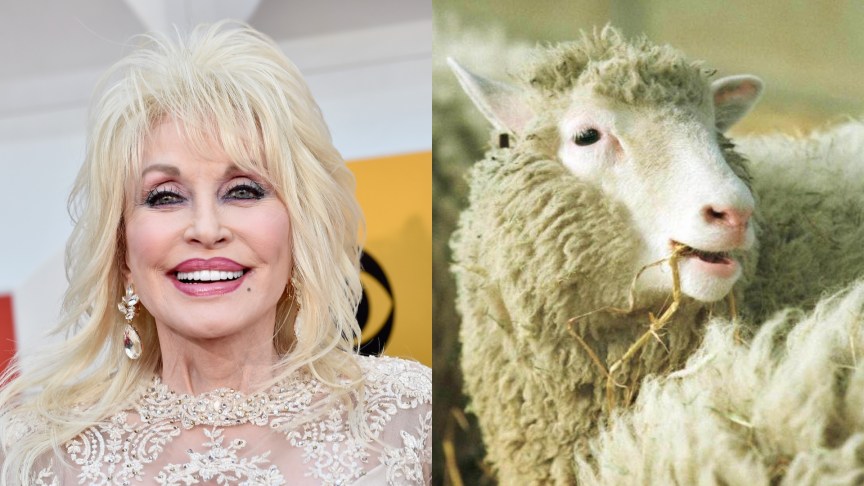
Although the late and beloved Dolly Parton was a country music legend, her legacy extends into areas like impressive entrepreneurial accomplishments, incredibly inspiring charitable efforts and various endeavors that both changed and saved lives.
That’s not to overlook the fact that, back in the ’90s, Parton was connected to one of the biggest scienctific breakthroughs of the time when the first cloned sheep was named after the icon “for the craziest reason,” according to Parade.
Dolly Parton Had a Sweet Reaction to the Sheep’s Name
 Getty
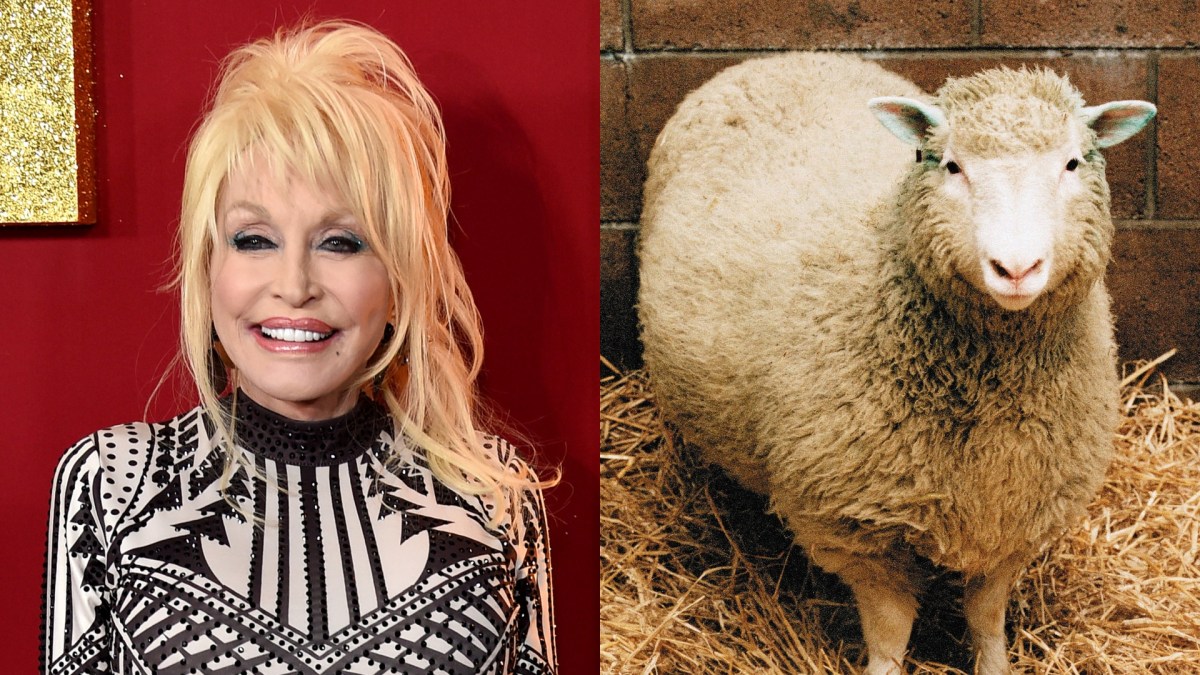
GettyOn July 5, 1996, a sheep was born in Scotland and its birth was kept a secret due to the fact that it happened to have been cloned, according to National Museums Scotland. It wasn’t until the following February that the Roslin Institute announced the arrival of the animal, which had been named Dolly.
Professor Ian Wilmut, who led the team involved in Dolly’s creation, reportedly explained the choice of name (via The Print), saying, “Dolly is derived from a mammary gland cell (of a sheep) and we couldn’t think of a more impressive pair of glands than Dolly Parton’s.”
People also noted that “the name Dolly was said to have been suggested by one of the farm workers who assisted with her birth, after he learned that the sheep had been cloned from a mammary cell.”
When Parton was asked by The Guardian about how she reacted when she found out that the sheep had been named after her (in relation to her bosom), she responded by saying, “I was flattered. … I was sorry when she died…”
Indeed, Dolly the sheep passed away after a rather interesting life.
What Happened to Dolly the Sheep?
After Dolly the sheep’s birth, she lived with other animals at the Roslin Institute. She went on to have six lambs, which were named Bonny, Sally, Rosie, Lucy, Darcy and Cotton, the National Museums Scotland explains. Parade also points out that she was cloned four times, which resulted in sheep named named Daisy, Debbie, Dianna and Denise.
Although Dolly remained relatively healthy, in the fall of 2001, she began to walk stiffly, and a test revealed that she had developed arthritis. National Museums Scotland mentions that this “fuelled the suspicion that cloned animals were destined to age prematurely.” While “[t]he cause of the arthritis was never established, … daily anti-inflammatory treatment resolved the clinical signs within a few months.”
While Dolly had overcome her issue with arthritis, and again appeared to be healthy, that eventually changed. In February 2003, when Dolly was six years old, it was found that she had developed tumors in her chest. As she had already been anaesthetised for the examination, it was decided that she should be immediately euthanized.
After the sheep passed, her body was donated to National Museums Scotland and was put on display, which is where it can still be seen to this day.
In fact, this past June, National Museums Scotland marked Dolly’s 30th birthday (see above) with celebrations for their “Millennial icon.”