


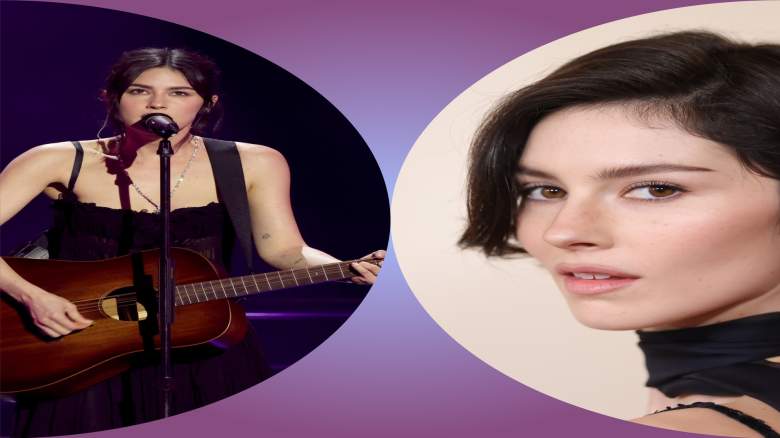
Gracie Abrams has spent the past several years turning heartbreak into carefully crafted confessionals. On her third studio album, “Daughter From Hell,” released Friday, the singer-songwriter expands that lens, trading stories of failed relationships for a more reflective look at adulthood, family and the person she hopes to become.
The 16-track project arrives after a whirlwind few years for Abrams, whose career has accelerated from live-streaming performances during the COVID-19 pandemic to headlining arena tours, opening for Taylor Swift’s Eras Tour and earning Grammy nominations. Rather than embracing the emotional turbulence that first introduced her to listeners, “Daughter From Hell” finds Abrams examining what comes after growing pains.
Despite its fiery title, the album isn’t an ode to rebellion. Instead, Abrams frames the record as a heartfelt apology and tribute to her mother, reflecting on her own stubbornness while acknowledging the patience that shaped her childhood. The title track captures that sentiment as she sings about wanting to become more like the woman who raised her.
During an appearance on “The Tonight Show Starring Jimmy Fallon,” Abrams described the song as “a decades overdue apology” to her mother. She admitted she wasn’t a “monster child,” but called herself a naturally defiant person whose behavior often tested her parents’ patience. She ultimately described the song as a thank-you note.

A More Mature Perspective
Throughout “Daughter From Hell,” Abrams shifts away from the singular focus on romance that defined much of her earlier work. While love remains part of the story, the album spends just as much time exploring identity, uncertainty, and the complicated emotions that come with entering adulthood.
Lead single “Hit the Wall” introduces the project’s polished pop production, while tracks such as “Look at My Life” tackle self-doubt and personal reflection. “Sober” leans into emotional vulnerability, and the upbeat “Minibar,” co-written with longtime collaborator Audrey Hobert, offers one of the album’s lighter moments.
Elsewhere, Abrams balances intimate songwriting with broader observations about the world around her. On “Humming,” she reflects on navigating life in an increasingly divided political climate, pairing unsettling imagery with memories of simpler childhood comforts. The contrast reinforces one of the album’s central ideas: finding stability in small, familiar moments even when the outside world feels uncertain.
The record also includes subtle references to Abrams’ relationship with actor Paul Mescal. “Afflictions” paints a portrait of a steady partner who provides reassurance during difficult moments, while Mescal also receives a songwriting credit on “Imaginary Friend.”

Even as Abrams broadens her subject matter, she never strays far from the diary-like writing style that has become her signature. Several lyrics acknowledge songwriting itself as a coping mechanism, suggesting that putting difficult experiences into music remains one of her greatest sources of comfort.
A New Era Begins
Abrams officially launched the album Thursday night with the television debut of “Minibar” on “The Tonight Show Starring Jimmy Fallon.” Performing with her full band under warm red lighting, she delivered one of the album’s most energetic tracks before sitting down with Fallon to discuss the new record.
She also confirmed that she will soon make her acting debut in an upcoming A24 film directed by Halina Reijn, although she declined to reveal additional details.
Looking ahead, Abrams said she’s eager to bring the new music to the stage on her upcoming “The Look at My Life” Tour, which begins Dec. 2 in Denver. After watching her previous tours grow from theaters to arenas, she told Fallon this production gives her the opportunity to build the kind of stage show she has always imagined.
“Daughter From Hell” ultimately feels less like a dramatic reinvention and more like the next chapter in Abrams’ artistic evolution. Her soft vocals, emotional honesty, and conversational songwriting remain intact, but they now carry the perspective of someone learning that growing up doesn’t mean having all the answers. Instead, Abrams embraces the uncertainty, using it to create her most self-aware and emotionally expansive album to date.


![Priscilla Presley Steps Out With Her Son in Rare Sighting [PHOTOS]](https://entertainmentnow.com/wp-content/uploads/2026/10/the-top-20-2026-10-21T164151.398.png?w=425)






![Tate McRae Thanks Fans for Number 1 Single With Gorgeous Bikini Pics After Spicy Victoria’s Secret Performance [PHOTOS & VIDEO]](https://entertainmentnow.com/wp-content/uploads/2026/10/GettyImages-2300897406-e1792395164465.jpg?quality=65&strip=all&w=425)



Comments
Gracie Abrams Embraces Growth on Introspective New Album “Daughter From Hell”