


Spoiler Disclaimer: This article will spoil the heck out of “The X-Files: I Want to Believe“
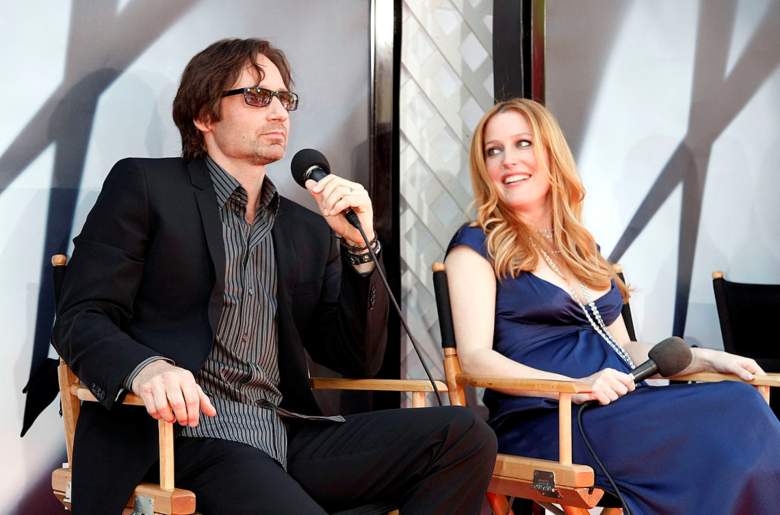
Back in 2008, six years after the original “X-Files” series concluded its nine-year run, Mulder and Scully returned to the big screen with “The X-Files: I Want to Believe.” Right off the bat, the movie was controversial for ignoring the overarching mythology of the TV series and its provocative cliffhanger ending, instead opting for a standalone story inspired by the show’s “Monster of the Week” episodes.
As for the film itself, it was met with a mixed-to-negative response from fans and critics, and was buried at the box office by the second weekend of “The Dark Knight.” Because of the film’s financial underperformance, any plans for an immediate sequel were put on hold and the franchise would go dormant for another eight years before returning for two more seasons (sixteen episodes) on the Fox network in 2016.
However, we’re once again on the cusp of an “X-Files” renaissance, with none other than Ryan Coogler (“Black Panther,” “Creed,” “Fruitvale Station”) developing a revival series for a new generation of fans. Perhaps in an attempt to hype up the future of the franchise, original creator Chris Carter, who directed and co-wrote “I Want to Believe,” was given the opportunity to revisit the film and make a Director’s Cut of the film, which is out now on Hulu/Disney Plus.
Before we dive into the differences between the two versions, I suppose I should make clear that I’m an “X-Files” enthusiast, and I’m always the first to go to bat for the theatrical version of the movie, back when that was the only option. I remember seeing it in theaters with my dad and my brother back in 2008 and the sheer joy of seeing Mulder and Scully together again, investigating a mystery with supernatural elements. With that in mind, let’s take a look at both versions of “I Want to Believe” and see how they compare and contrast with each other.
Vrach Frankenshteyn
The Director’s Cut is subtitled “Vrach Frankenshteyn,” or “Doctor Frankenstein.” I wonder if that was the original title of the film, or something they came up with for this new edit. It alludes to the ‘monster’ of this story, a Russian doctor practicing unholy experiments involving grafting human body parts from multiple victims to create a new body for a serial killer. It could also be a nod to the idea of reassembling a movie, cutting out some parts, adding in others. It suggests that the film could, in fact, be very different if the pieces are rearranged.
When I booted up Disney Plus to watch “Vrach Frankenshteyn,” I was waiting to see any substantial changes. Chris Carter promised a more violent version of the film, claiming that the horror had been stripped out of his original edit. So, is “Vrach Frankenshteyn” the scariest X-File ever? Does the movie overhaul the experience to feel like a straight-up horror story?
In a word, no. Like most Chris Carter projects, this new edit is bound to be controversial with the fandom. It adds very little, but alters a lot and removes quite a bit, as well. I’m not going to go over every single change, but I will point out some examples while analyzing how the film feels different in its new form.
Back in 2008, “I Want to Believe” felt like a cinematic event, the long-awaited return of Mulder & Scully. At the time, it was a joy just to get cozy with them and see their relationship in a new stage. After years of “will they or won’t they,” followed by the whole saga of Scully’s pregnancy and Mulder’s trial in the finale, some fans were downright giddy to see Mulder and Scully share a bed again, cuddle, and be sweet together before they inevitably clash over faith and the supernatural elements of the case. Well, a lot of that is gone in the new edit. While they still share a bed, we don’t see their kiss, nor Scully’s comment on Mulder’s “scratchy beard.” One scene later, when the theatrical cut has Scully call out Mulder’s crusade with the unexplained as an excuse to chase the ghost of his long-lost sister, Samantha, the Director’s Cut removes that part of the conversation entirely. Instead, Mulder and Scully’s argument is more focused on Father Joe, a pedophile priest whose psychic visions are guiding the FBI investigation into a missing agent. A later scene where Scully says that Mulder’s stubbornness is why she fell in love with him is also removed in the Director’s Cut. And their big kiss at the end is also completely removed.
Another change involves Amanda Peet’s character, FBI Agent Whitney, a fan of Mulder’s work on The X-Files and the person who brings him (and Scully) in on the case. In the theatrical version, she has a couple of flirty moments with Mulder, like noticing his clean shave when he arrives on the scene with Scully, who immediately takes a disliking her. However, this never develops into anything resembling a proper ‘love triangle.’ It’s just a couple of cute little beats that help develop Peet’s character before she gets pushed down an elevator shaft to a tragic and violent end. These little beats are almost all entirely removed in the Director’s Cut. Instead, Agent Whitney is more professional, if less of an audience surrogate for the legion of frisky fans who want to run their fingers through David Duchovny‘s hair (it’s so gorgeous here!) Overall, those fans who are mainly here for the Mulder/Scully love connection are going to feel short-changed by the Director’s Cut.
These changes in the first third of the film make the movie feel less like a ‘cinematic event’ and more like a jumbo-sized episode. After all, thanks to the magic of internet streaming, anyone can jump straight from Season 9 of the original show to this movie without having to wait six long years. It also makes the movie more accessible to newcomers. With the reference to Samantha removed, the Director’s Cut feels less like an attempt to make the story of the movie feel bigger than it is. Then again, these cuts also feel like a half-measure, since there are no substantial changes that I noticed to the B-plot of Scully having a crisis of faith as a medical doctor treating a young boy named Christian (subtle!). The status quo of the show is no longer in play, and the theatrical cut runs with that. The Director’s Cut still has Mulder and Scully at different places in their lives and careers, but without the brief moments that push their relationship forward. Thus, they feel like they have one foot in the past of the show and one foot in the present of the film.
The opening scene has a minor change that makes the movie feel more like an extended episode. In the theatrical cut, when the ill-fated FBI agent is driving down the snowy road, she’s listening to a nondescript radio station. In the Director’s Cut, she’s listening to “I Fall to Pieces” by Patsy Cline, a darkly comic allusion to the events of the story. It might be a little ‘on the nose,’ but it works at creating a sense of unease and ironic black comedy that the original show utilized so well.
There are other changes that feel like the undoing of minor edits that were made to give the theatrical version a PG-13 rating. Some are obvious, like longer shots of the mutilated bodies in the third act, while others are more subtle: after the woman is run off the road and the serial killer smashes her window, the Director’s Cut adds a sound effect when he punches her in the face, making the scene feel a little more violent. More noticeable is Agent Whitney’s death. The theatrical cut shows her falling down the elevator shaft towards a piece of twisted metal before cutting to black. The Director’s Cut actually shows her fall and land on the ground, killed instantly by the impact and impaled on the rusty elevator steel. It’s a visceral little moment that makes strong use of visual effects to show a version of “person falls to their death from a great height” that you’ve likely never seen before.
Another subtle change comes when Mulder accidentally frightens Scully while she’s outside of Father Joe’s apartment. The theatrical cut accentuates the moment with a musical sting, a cheap trick to elicit a minor jump scare. The Director’s Cut has more faith in the performances of David Duchovny and Gillian Anderson and removes the musical sting, allowing for their interaction to flow more naturally. Finally, the little joke of the portrait of George W. Bush paired with the X-Files theme has been removed here. That joke was already on its way out in 2008 when the theatrical version was released, and in 2026, George Bush seems downright quaint compared to what came after. For more on that, check out the Season 11 episode, “The Lost Art of Forehead Sweat,” one of my favorite TV episodes of all time.
Is Vrach Frankenshteyn Better Than I Want To Believe?
The vast majority of the changes in this Director’s Cut are on the subtle side. There are no major structural changes or game-changing deleted scenes that completely reshape the experience. This is still “The X-Files: I Want to Believe.” It’s just focused a little bit less on being a ‘catch-up’ with Mulder and Scully. But at the same time, it doesn’t trade that focus for anything else. It’s not more focused on the Frankenstein of it all, as there are no substantial new scenes with the serial killer’s scheme, which really could have used more meat on its bones, so to speak.
It’s definitely more violent, especially in the third act. The theatrical version shied away from showing the bodies, which had been hacked to pieces, and only gave us fleeting glimpses of the evil science. The Director’s Cut restores those edits to strong effect, but it never really goes into full-on R-rated territory. There are plenty of episodes of the original show and the revival that are more violent than anything seen here. “Sanguinarium,” “Home,” and “Nothing Lasts Forever” come to mind. “Nothing Lasts Forever,” in particular, almost feels like a redux of the ‘Frankenstein’ story depicted here.
If you haven’t seen “I Want to Believe” since 2008, you probably won’t notice most of the changes in this version. It’s still, fundamentally, the same movie. It still has the same story, the same structure, the same strengths and weaknesses. It even still has the same plot hole of Christian’s parents opting out of the difficult surgery and then Scully doing the surgery anyway. I’m not a doctor, but that doesn’t seem legal, right? I don’t use the term “plot hole” lightly, but I’m pretty sure this qualifies as a genuine example.
At the end of the day, “I Want to Believe,” in either edit, was not what the fans wanted in 2008, and it probably isn’t really what they want in 2026, either. But fans know that when they want “The X-Files” to zig, Chris Carter will always choose to zag. Taken on its own merits, “I Want to Believe” is a thrilling mystery with a slow-burn energy and two excellent lead performances. Gillian Anderson is great as a version of Scully struggling to move on from her past into a new field that winds up testing her faith even more than her old work at the FBI. Meanwhile, David Duchovny is like a hermit who had been asleep for six years and is finally brought back to life thanks to a case that only he can solve. Together, they realize just how much they need each other, all while investigating one heck of a creepy case.
“I Want To Believe” is still flawed. The ending builds to a climax that never fully materializes, and the villain is dispatched with little more than a sucker punch from Scully. “Doctor Frankenstein” doesn’t succeed in actually building his monster and is a terribly underdeveloped character. The relationship between the killer and his partner, the would-be monster, is sorely lacking and needed more screen time. Father Joe still dies off-screen, with much of the denouement relegated to rapid exposition in the last five minutes. In the context of a big Hollywood revival, that’s kind of a bummer. But when seen as a jumbo-sized “X-File,” it’s more acceptable, even if it’s not as thrilling as, say, the reveal of a giant alien spaceship like in the 1998 movie.
But it’s easy to criticize “I Want to Believe” for what it lacks. What it actually does, it does quite well. The mystery unfolds at a brisk pace, especially in the Director’s Cut, which is about ten minutes shorter than the theatrical version, and the finale is eerily macabre in a classic X-Files kind of way. The movie also carries a particular cinematic sensibility. The mid-film chase scene has a kinetic energy beyond what the show could accomplish, and never in Hollywood history has falling snow looked so beautiful. Seriously, all of the snow in this movie is gorgeous. Alas, there’s no Oscar category for ‘best snow,’ but if there was, “I Want to Believe” would have won. Also, the closing credits are one of my favorites in all of film, with stunning visuals and a banger soundtrack by UNKLE. Thankfully, the closing credits and the final shot of Mulder and Scully in their little vacation boat are fully retained in the Director’s Cut.
If you’re a fan of “I Want to Believe,” the new cut is streamlined, for better and for worse. If you didn’t like it before, you won’t like it now. If you only liked it because it was the first time we truly got to see Mulder and Scully as a genuine romantic couple, well, you’re probably gonna hate it now. But if you’re brand new to the series or just in need of a slightly remixed version of an underrated chapter of the long-running saga, “The X-Files: I Want to Believe – Vrach Frankenshteyn” is as good an entry point as any.

Comments
The X-Files: I Want To Believe – Is The Director’s Cut An Improvement?