


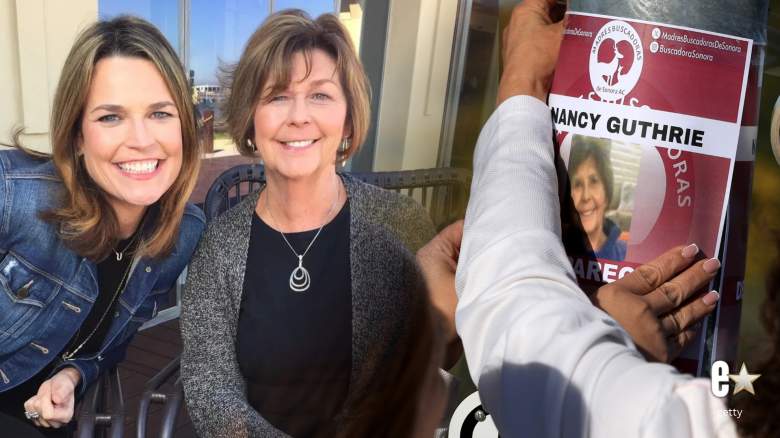
A former detective developed a specialized software he believes could potentially help the Nancy Guthrie investigation.
During the October 22 episode of “Brian Entin Investigates,” former detective and cold-case specialist Aaron Bencsik demonstrated CORE, a software tool he developed to help investigators solve cases, including those that have gone cold.
Benzick explained that the software allows investigators to organize evidence, build timelines, and uncover connections in complex cases such as Guthrie’s.
Nancy Guthrie Update: Former Detective Explains How New Software Could Help Investigation
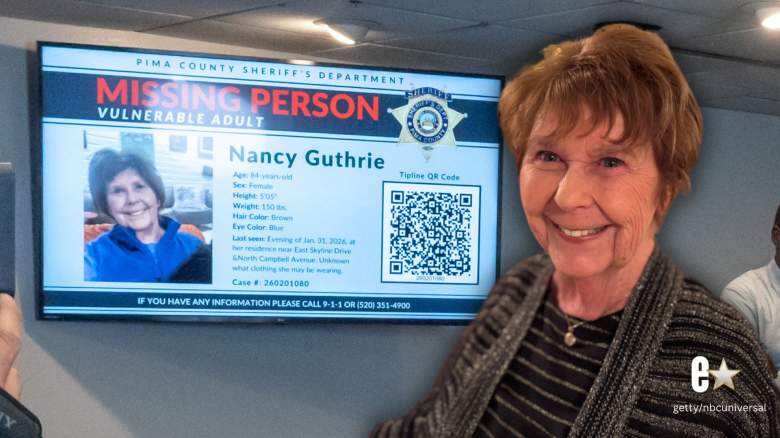
Bencsik noted that investigators are dealing with a substantial amount of information and digital evidence in Guthrie’s case, making it essential to establish a detailed timeline.
“We’re getting all this data in cases. And usually we’re working out of Excel spreadsheets or in a file share, different people working on them,” he explained.
Bensick continued, “We don’t have them at our fingertips. And so I’ve pieced together and written some software under a company and we developed a software called CORE, which you can visualize all this information in one place.”
Nancy Guthrie Case Not a Cold Case, Says Former FBI Agent
While the Nancy Guthrie case remains open, Benzick said investigators could approach it the way they would a cold case because of the time that has passed.
“It is definitely time to take an approach that you may approach a cold case with and start looking at this case, even though this case, I would say, is not technically a cold case at all,” he stated.
Meanwhile, retired FBI agent Maureen O’Connell noted that while Guthrie’s disappearance is not officially a cold case, it is no longer a “roaring hot case” either.
“Well, I think by virtue of the amount of time that has passed, it’s certainly not a roaring hot case,” she told Entin.

Still, O’Connell believes there’s still hope, especially after Pima County Sheriff Chris Nanos revealed that evidence was taken to four different labs for further testing.
“I did like what he’s talked about the evidence. He talked about evidence being at four different labs,” she continued. “That means there’s a lot more evidence than we were originally told.”
O’Connell admitted that she’s “absolutely gobsmacked that there hasn’t been any kind of genetic genealogy hit yet.”
Previously, retired FBI agent Steve Moore, who investigated numerous cold cases during his career, shared his assessment of the investigation in an interview with Entin.
“The case is cold. The case is completely cold,” Moore said during the July 21 episode of “Brian Entin Investigates.“
Still, Moore emphasized that a cold case is not necessarily a closed case, adding that the FBI “doesn’t forget” such investigations.
“They don’t close those cases ever, but they’ll give them to new agents who are coming in with a new set of eyes who are not indoctrinated into the way the FBI necessarily investigates everything. And sometimes people see them in a different light,” Moore explained.
He continued, “This is not acceptable in the FBI. We cannot have unsolved cases. We’re the FBI. So, there is probably a lot of push on this.”














Comments
Nancy Guthrie Case Gets Hopeful Update as Ex-Detective Unveils New Tool