


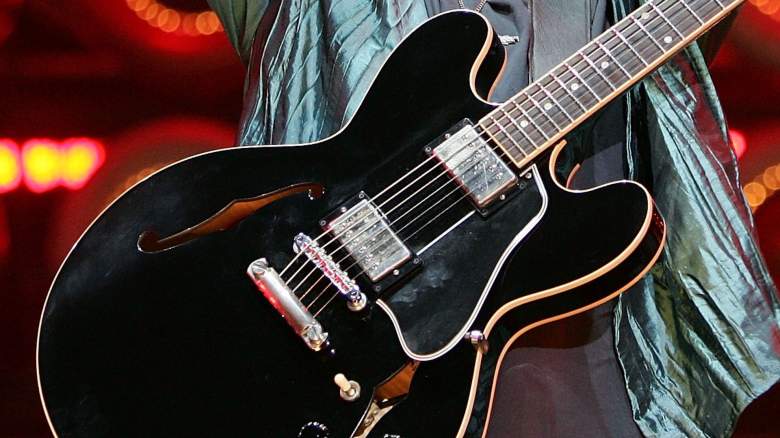
Guitarist Del Casher, whose musical invention set the template for 1960s psychedelic rock, has passed away at 88.
TMZ was the first to report that Casher had passed away. According to a GoFundMe launched to help support his widow, Eiko, Casher died on October 1 after a battle with cancer.
“Before that loss, COVID devastated his sound studio business and forced him to sell valuable guitars and equipment just to survive,” shared the fundraiser. “During that difficult time, they also had to take out a reverse mortgage on their home. Now, with the home’s value having decreased, the loan balance is more than 70% of its current value. Eiko is now facing overwhelming financial and personal challenges at a time when she should be surrounded by peace, care, and stability.”
Inventor of the Wah-Wah Pedal
As Rolling Stone points out, Casher was not only a guitarist of some repute, he was also an innovator and inventor, and it’s in that capacity that he made a huge impact on rock music.
He was born Delton Kacher in Hammond, Indiana. During the 1950s and early ’60s, Casher performed with a variety of artists, including Gene Autry, Lawrence Welk and the Three Suns. At the same time, he was also experimenting with ways to make his electric guitar sound unique.
During the early 1960s, Casher was hired to play electric guitar for the Thomas Organ company’s Vox Ampliphonic Orchestra.
Eager to figure out how to make his guitar sound like a trumpet, Casher worked with Thomas Organ engineer Brad Plunkett. As they experimented, Casher suddenly heard the sound he’d been hearing in his head.
“I said, ‘What’s this knob?’ And I’m flipping it around and noticing it’s going wah-wah as I went from left to right,” Casher recalled in a 2011 interview with The New York Times. “I said: ‘Hold on! This is what I’ve been looking for!’”
And with that, the wah-wah pedal was born.
Casher’s invention was initially met with skepticism from the company, but at his insistence they agreed to produce the pedal and see if there was a market for it.
“They thought I was a crackpot,” Cashed told the Times, “but they humored me.”
Dubbed the “Cry Baby” pedal, Casher played on a demonstration recording that was sent to music stores, explaining how to use the pedal and how it could alter a guitar’s sound.
First released in 1967, Casher’s pedal was not an immediate success, and flopped with guitar players.
As Casher told the Times, it did not catch on like a wildfire. “It didn’t even light a match,” he admitted. “Talk about being ahead of your time.”
Jimi Hendrix Changed Everything
One of Casher’s Cry Baby pedals wound up in the hands of guitarist Frank Zappa, who was then leading trailblazing psychedelic band The Mothers of Invention. Zappa gave his pedal to Jimi Hendrix, who’d come to define the psychedelic sound on his debut album, “Are You Experienced,” and its follow-up, “Axis Bold As Love.”
It would be on Hendrix’s third album that Casher’s wah-wah pedal really made an impact, with Hendrix using the device on several songs on “Electric Ladyland,” including “Voodoo Child,” “Burning of the Midnight Lamp” and “All Along the Watchtower.”
Meanwhile, guitarist Eric Clapton — then one third of supergroup Cream — likewise showcased the pedal on the band’s track “Tales of Brave Ulysses.”
From there, the wah-wah pedal became a standard piece of musical equipment for most guitarists, used on classic rock records by the likes of Led Zeppelin’s Jimmy Page, Black Sabbath‘s Tony Iommi, Pink Floyd’s David Gilmour and many more.
The wah-wah was also at the center of a No. 1 Oscar-winning single: Isaac Hayes’ funk classic “Theme From Shaft.”
Further Musical Exploration
Beyond the wah-wah pedal, Casher has also been credited for assisting with the creation of other guitar pedals, including the Ecco-Fonic and the Fender Electronic Echo Chamber.
As a musician, he backed up such artists as Elvis Presley — and can be seen playing guitar in the King’s 1964 film “Roustabout” — and also performed in various film scores.
“I feel gratified that I was there at the beginning,” Casher told the Times. “I would just like guitar players to think of me once in a while. The only thing I ask is: remember me.”













Legendary Guitarist Who Changed the Sound of Rock Has Passed Away at 88