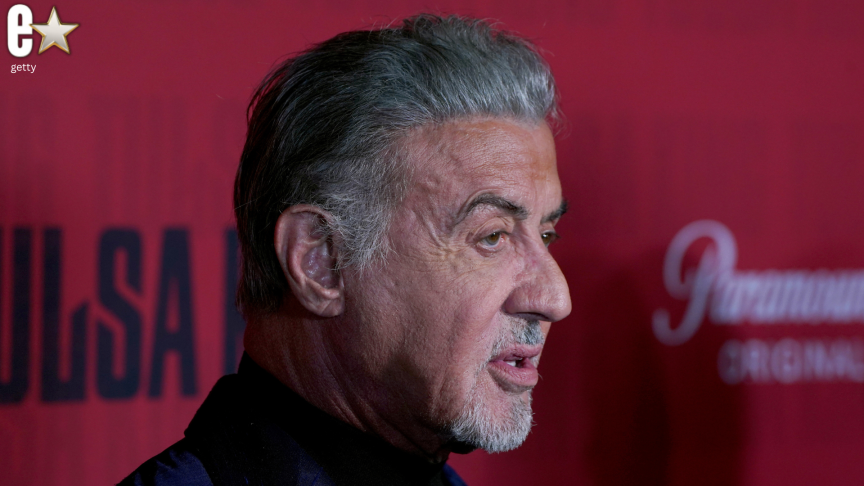
In 2012, Sylvester Stallone suffered a heartbreaking loss, with his son Sage passing away at the age of 36 from coronary artery disease.
And the “Rocky” icon is reflecting on the moment he learned of his son’s passing, saying that he “held it together” for a week before his “pain, grief, and guilt” became too much.
“I’ll never forget, it was so cold: My mother’s new husband, who I’d never even met, who was a doctor, called me and goes: ‘Sly, he’s gone. Sage – he’s gone.’ I went, ‘Gone where?’ ‘He died, he’s gone. I’m sorry.’ Click,” he recalled during a new interview with The New York Times. “The thing is, you have so many episodes of guilt. Like: What could I have done? Should I have been there? What if I did that? If I went right or went left?”
Sage, who was Stallone’s eldest son, played the role of Rocky Balboa’s son Robert in the 1990 film “Rocky V.”
Sylvester Stallone Says He Held It Together As Best He Could
While the family was planning the funeral, he was able to cope with the loss and keep his composure, but afterwards, he couldn’t hold back his heartbreak after losing his son.
“Because of the funeral, dealing with the mother, dealing with your life in the present, it just takes you into a whole other world. You go: Wow, I’m holding it together. When’s it going to happen?’ he explained. “But all I can say is that he was a very kind kid. He had a great mother. He would have done wonderful things in the future. I just had no idea that he had something that you would expect a very advanced adult to have. But no, you don’t get over that.”
Sylvester Stallone Is Releasing A New Memoir
Stallone is releasing a new memoir, titled “The Steps,” which is in honor of the Philadelphia Museum of Art stairs he famously climbed in one of the most iconic film scenes from “Rocky.” In the book, he reflects on some very difficult moments from his life, adding that he put those “away in a box” to be able to move forward.
However, for the book, he decided to revist those.
“It was some mixed emotion,” he told the New York Times. “There were some tears, some laughter, some anger and bitterness. And then I thought, Maybe that was the motivation to do something extraordinary as opposed to having no angst inside of me. It’s like, The guy punched you in your mouth, but did he do you a favor? I truly believe that the parents are the sculptors, and they’re sculpting their masterpiece, or their disaster.”
In the interview, he was also asked if he ever considered going to therapy later in life after all he faced.
“No. It’s not going to help, because this doesn’t go away,” he explained. “You cover it all with subterfuge and ideology and intellectual this and that and breathing and meditation until that moment, late at night, poof. You’re right back there, and now you’re in anxiety. You ever have anxiety?”