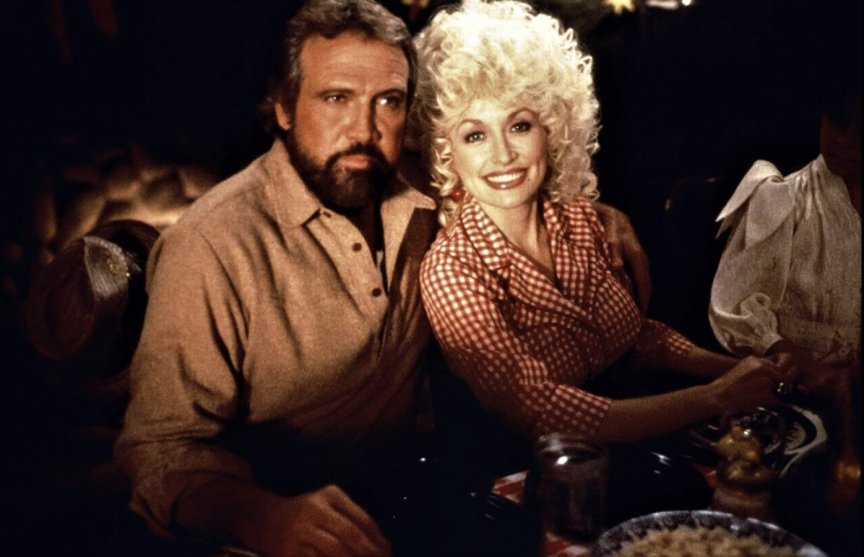
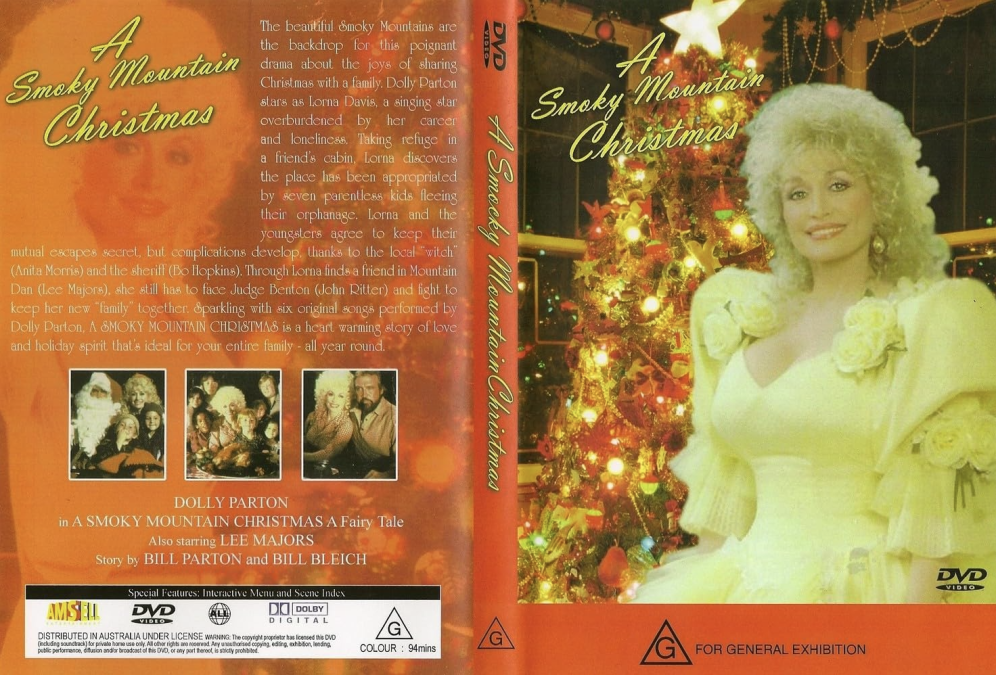
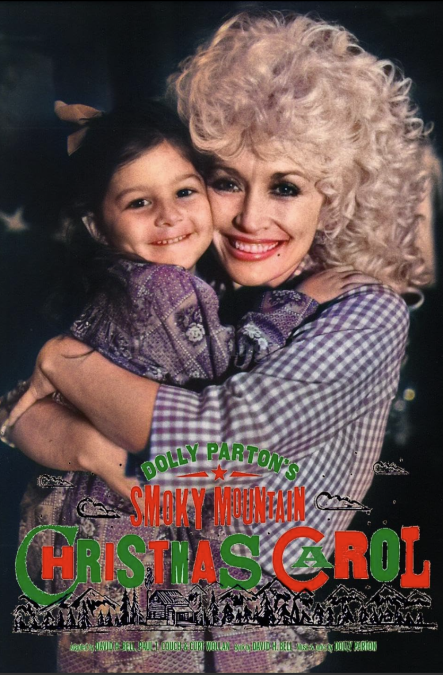
Dolly Parton’s A Smoky Mountain Christmas is the prototype for an entire genre that didn’t yet exist. Long before Hallmark built their seasonal empire of small towns churning through magical realism, misunderstood celebrities, and found families, Parton had already sketched the formula: charm, direction from Henry Winkler, and more Appalachian folklore than the network would ever dare to touch.
The film is about the importance of making bonds with those around you. The first, real bond explored, is with Parton’s character reminiscing about her childhood friend Mary Lou: “Mary Lou was my best friend… she was too chicken to start the trouble I was ready to get us into, but she was always there to get me out.” It’s a line that immediately sets a tone of nostalgia, mischief, and emotional sincerity; a braided cocktail distinct to Hallmark film protagonists.
The Hallmark Formula, Before Hallmark Existed
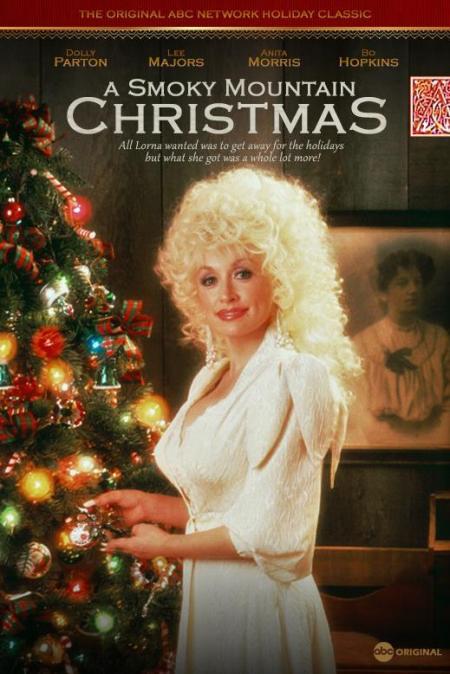
Parton plays a country‑pop star pushed to exhaustion by 1980s producers who want bigger choreography, louder guitars, and endless physical exertion. She’s the talent; she has to sing; she’s writing her own music; and she’s being treated like a product. It’s the classic “rich person escapes to a small town to rediscover herself” arc, save this film did its adventure with Parton, decades before it became tired in movies like The Town That Christmas Forgot or Chasing Leprechauns.
She calls home, asks whether Lou’s grandparents’ Smoky Mountain cabin still exists, and flees Los Angeles without answering questions. It’s a clean setup: fame is a suffocating ordeal to Parton’s Lorna; and the mountains could provide oxygen.
One side-character, is a tabloid journalist follows her; a man so desperate for a scoop that he nearly gets eaten by dogs before Parton reluctantly lets him inside. He immediately starts taking photos, forcing her to treat him like a job instead of a human being. Vernon, her assistant, calls him out as the “peeping Tom” he is.
This is Hallmark DNA in its earliest form:
- the nosy outsider
- the threat to small‑town serenity
- the moral lesson about sensationalist media
Parton’s distaste for exploitative journalism is palpable; she’s always been honest about showbusiness being a world where people anticipate taking advantage of each other.
The First Witchcraft-centered Secondary Subplot?
Then comes Anita Morris’s character, who is a witch. Yes, a literal witch. She appears, establishes supernatural tension, and vanishes as her first impression. With magical realism dialed up to eleven; Hallmark would later adopt this kind of magic that contains soft glow, twinkle, and maybe a few wishes. A Smoky Mountain Christmas uses it to extend the Appalachian fairytale myth adventure it’s taking you on.
The Family Blueprints of Dolly Parton
Parton discovers that the cabin has been mysteriously “fixed up.” The twist: it wasn’t Mary Lou — it was a group of orphans secretly living there, terrified of being found out. Ashley Bank, playing Mary (not Mary Lou), delivers one of the film’s strongest kid performances; bringing adolescent emotional clarity to scenes that could’ve easily tipped into melodrama.
Parton forms an uneasy alliance with the children: they won’t expose her; she won’t expose them.
These aspects would frequently be used in films from Hallmark;
- strangers forming a family
- emotional healing through kindness
- Christmas as a catalyst for bonds
Parton’s songs are structural. Acoustic numbers are shot with close attention to the children’s faces; they listen, absorb, and change. One whispered lullaby becomes a thesis statement; Christmas isn’t even the point; connection is.
The soundscape even shifts into horror when the witch’s influence distorts Parton’s guitar tuning, pushing her toward a cliff. Mountain Dan rescues her, introducing another Hallmark archetype: the rugged, misunderstood local with a heart of gold.
Mountain Dan: The Original Hallmark Woodsman

His cave is adorned with charms like the ones Parton’s grandmother used to ward off spirits. He recognizes her instantly: “I may live under a rock, but not on a different planet.”
He’s gentle, awkward, and spiritually attuned. That’s the blueprint for every Hallmark “mountain man,” “forest ranger,” or “quiet carpenter” who helps the protagonist rediscover herself.
A montage follows: Mountain Dan and the children rebuild the cabin. The music ducks to highlight tender interpersonal beats. It’s pure, maternal rhythm from Parton; but more earnest, more handmade, and tied closer to the area and atmosphere she grew up in.
The Third‑Act Chaos: Witchcraft, Corruption, and the Jailbreak of one Dolly Parton
The final 30 minutes are wild; genuinely more intense than anything Hallmark would ever attempt.
- The sheriff arrests Parton.
- The children are dragged back to a dilapidated group home.
- The witch utilizes a poisoned apple pie that is only foiled by ‘True Love’s Kiss’.
- An elderly woman threatens the sheriff’s political future, calling him a “miserable toad.”
- Mountain Dan and the journalist break Parton out of jail by breaking a hole in the wall old-west style.
It’s chaotic, magical, and deeply charming; a reminder that TV specials used to swing for the fences.
To recap, everything Hallmark would later standardize is here:
- Celebrity burnout arc
- Small‑town refuge
- Found family
- Moral lesson about media
- Holiday redemption
- Magical realism
- Rugged local love interest
- Children who need emotional healing
- A villain who represents institutional failure
But A Smoky Mountain Christmas does it with Appalachian folklore, witchcraft, and Dolly Parton’s songwriting. And those elements Hallmark would never be able to replicate with this level of sincerity over hundreds of their films.
The children eventually vote that Dolly should be their mother. It’s sentimental; it’s sweet; it’s earned.
A Forgotten Fairytale That Deserves Its Crown
This film predates the Hallmark Channel by nearly twenty years, yet it remains the clearest prototype of the holiday‑movie formula that would dominate cable television for decades. It’s stranger, warmer, and more musically grounded than its successors. But most importantly serves as a reminder that Dolly Parton has always been ahead of the curve.
A Smoky Mountain Christmas isn’t just a TV special. It’s the blueprint. The only place to stream the film was on FuboTV from November 2022 to December 2022. I’ve been scouring JustWatch, to track where it pops up next. Here’s hoping it can get remastered and preserved with the love that it deserves, since Dolly Parton put a great amount of love in it and the thematics reflect the great things she would later achieve with her life.